Armenia · December 2020 · Where it began
After the War
The ceasefire was a few weeks old and Covid was at its height. A week in December that led to everything after.
From An Armenian Journal
In November 2020 I decided to travel to Armenia. The war was coming to an end.
I left London in the knowledge that my mission was worth our family’s while. And I literally did not know anyone upon arrival.
Field note · The minibuses
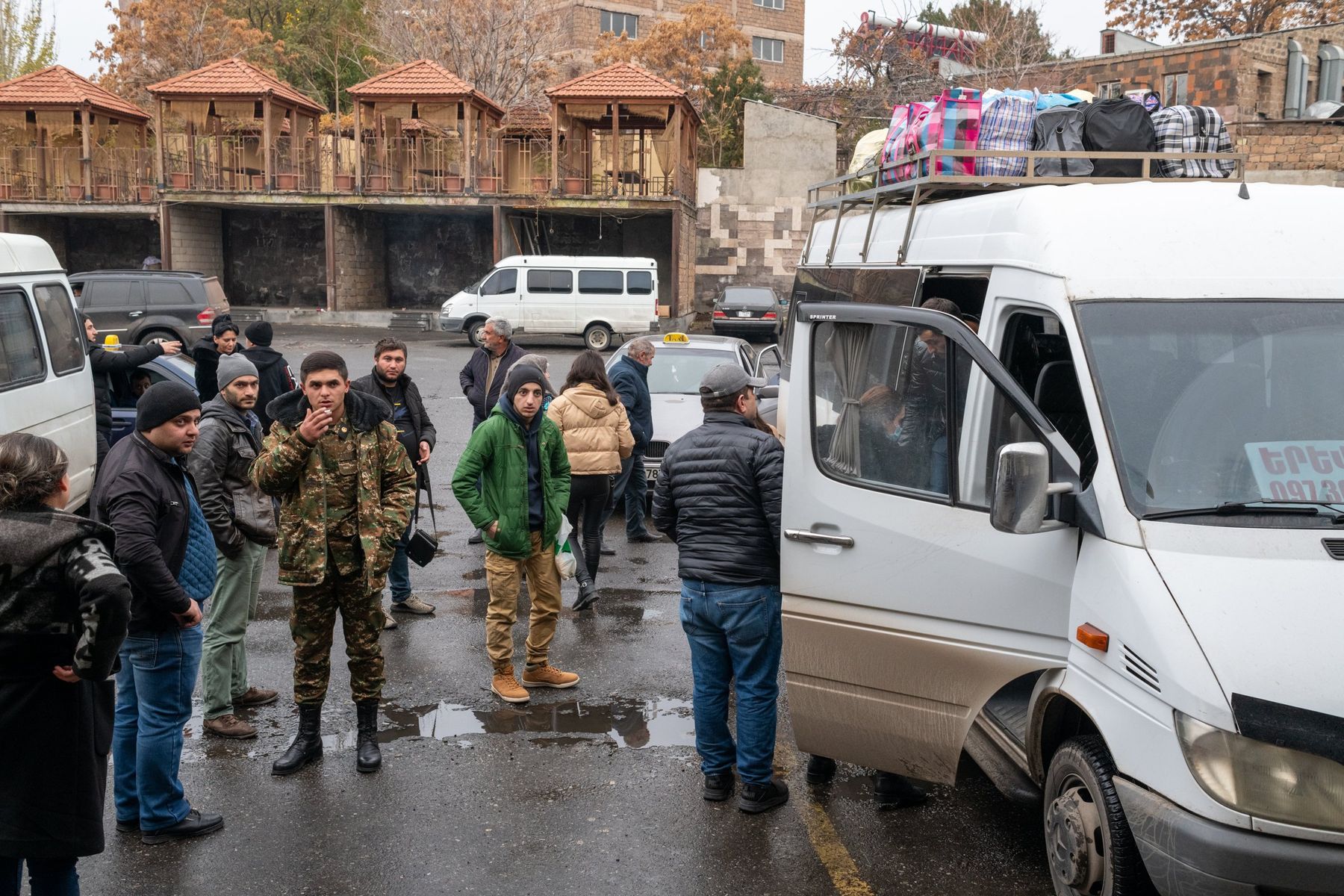
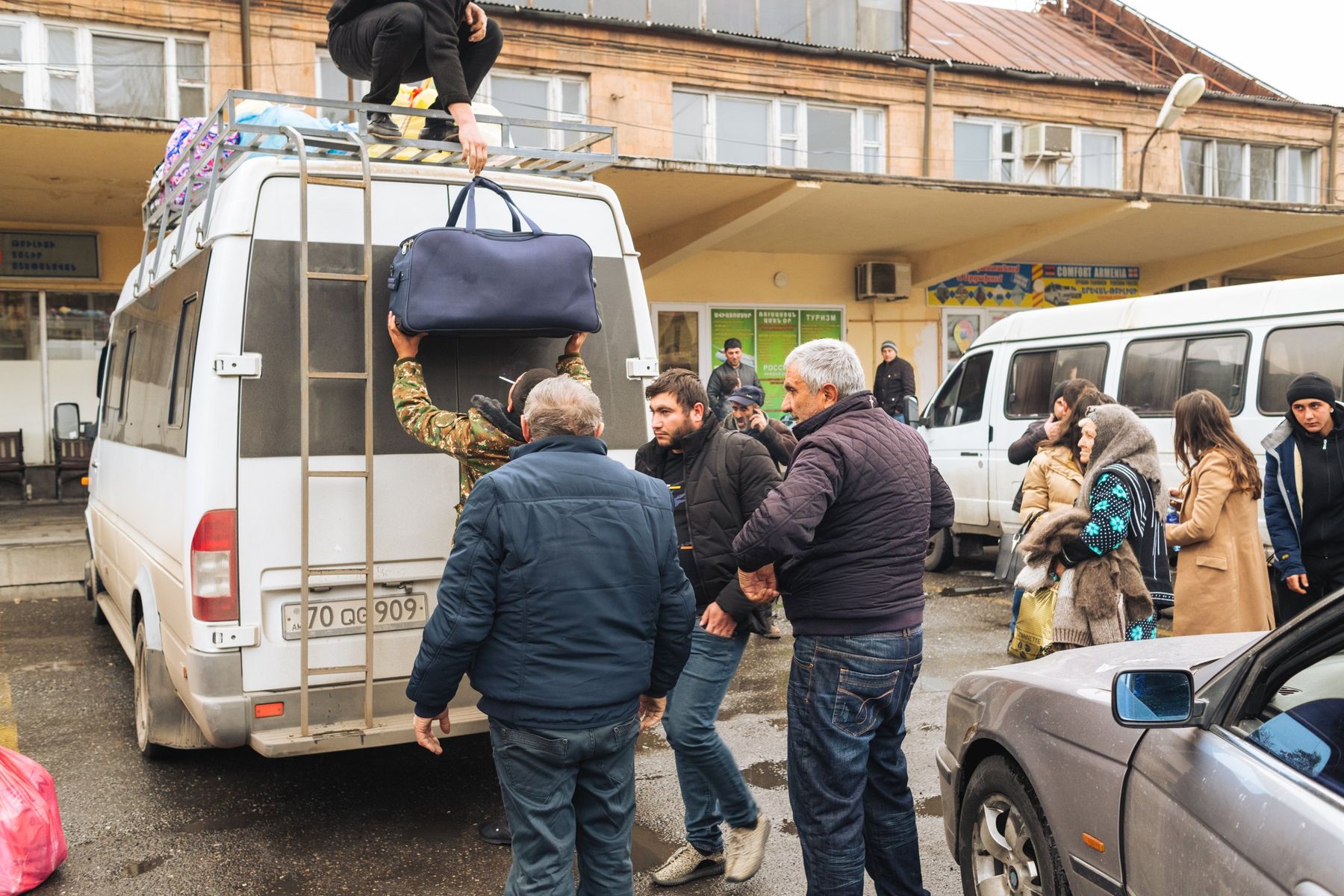
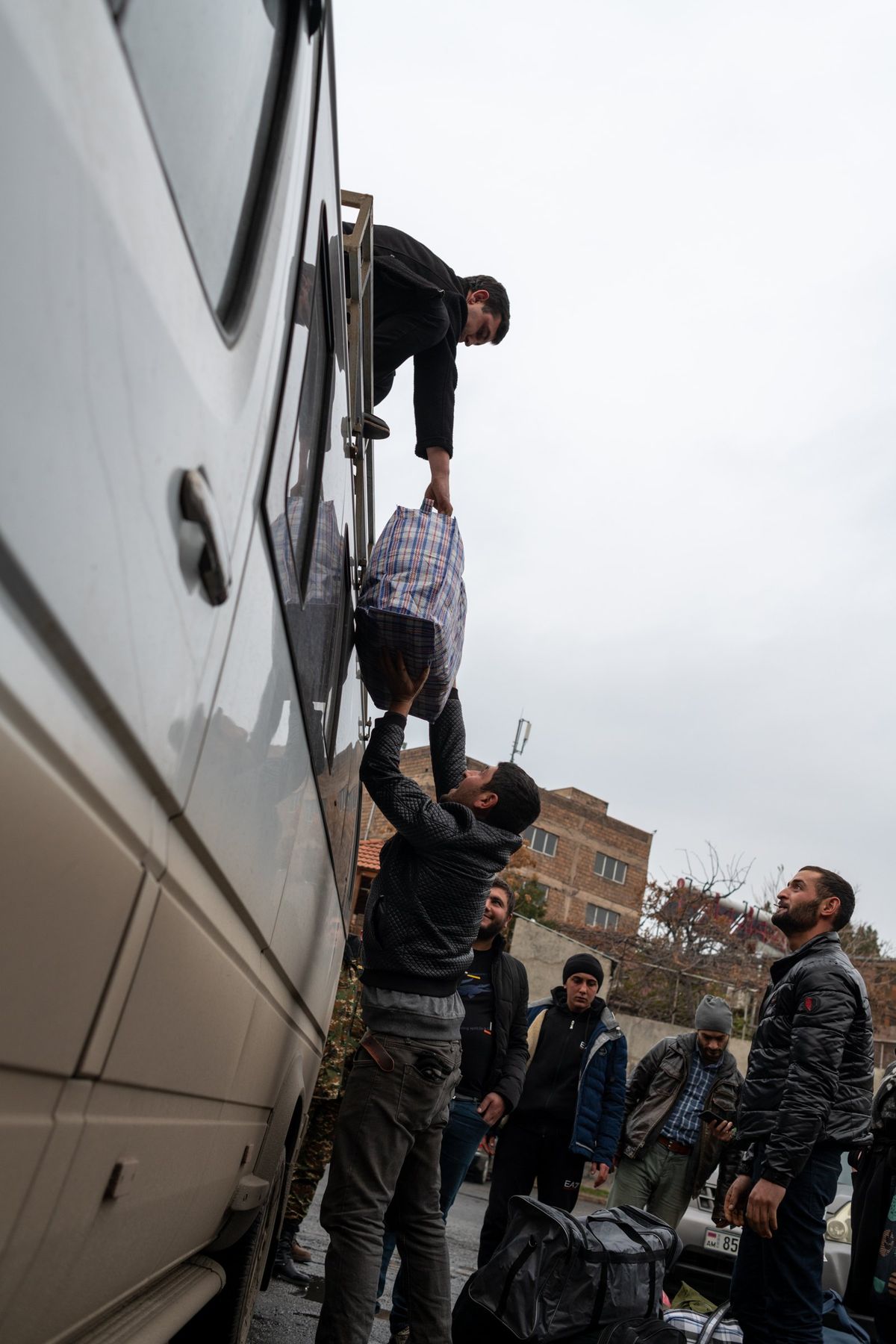
The minibuses were arriving, not leaving.
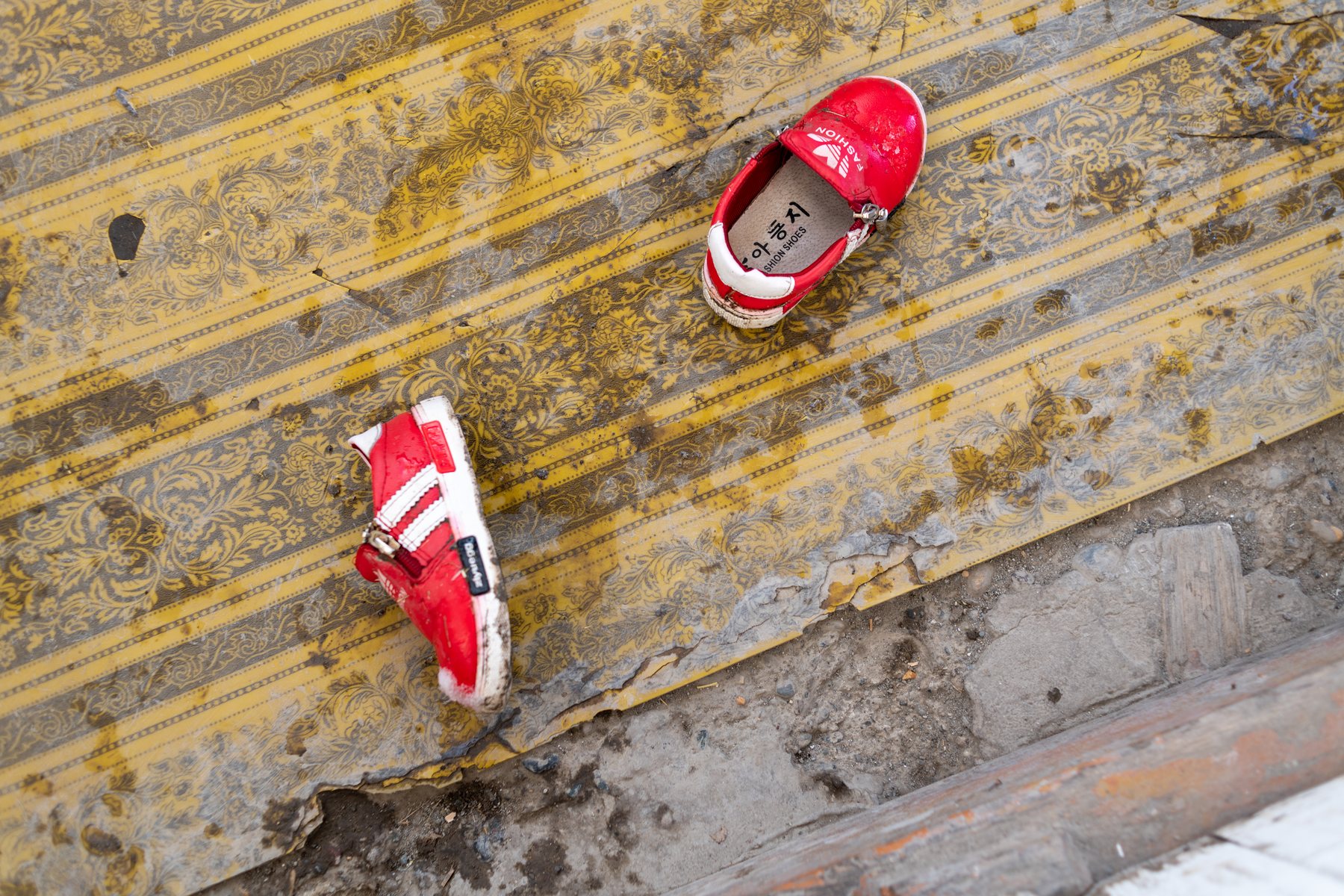
Families who had fled Artsakh climbed down with what they could carry. The rest came down off the roof.
Field note · Mets Masrik, 11 December
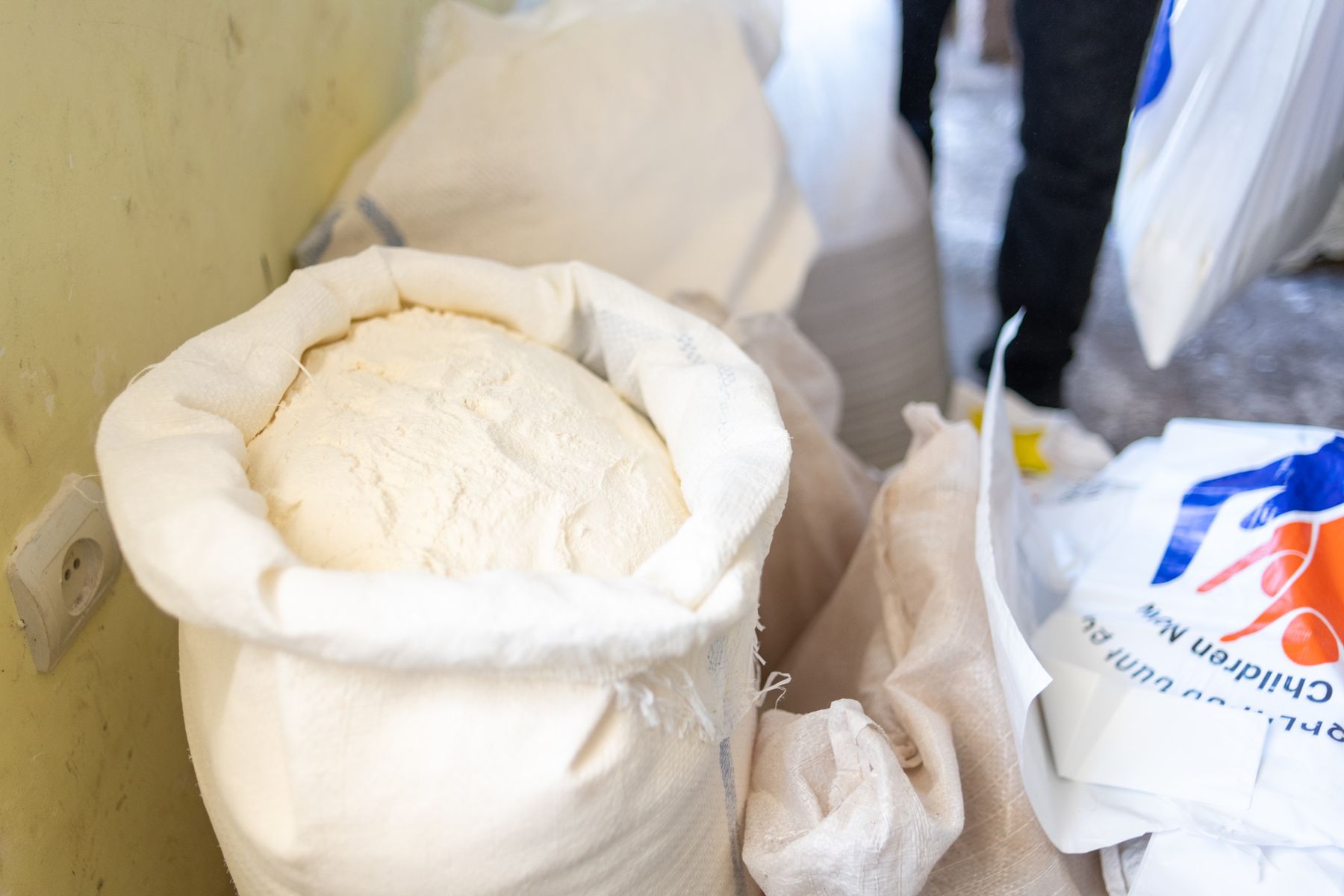
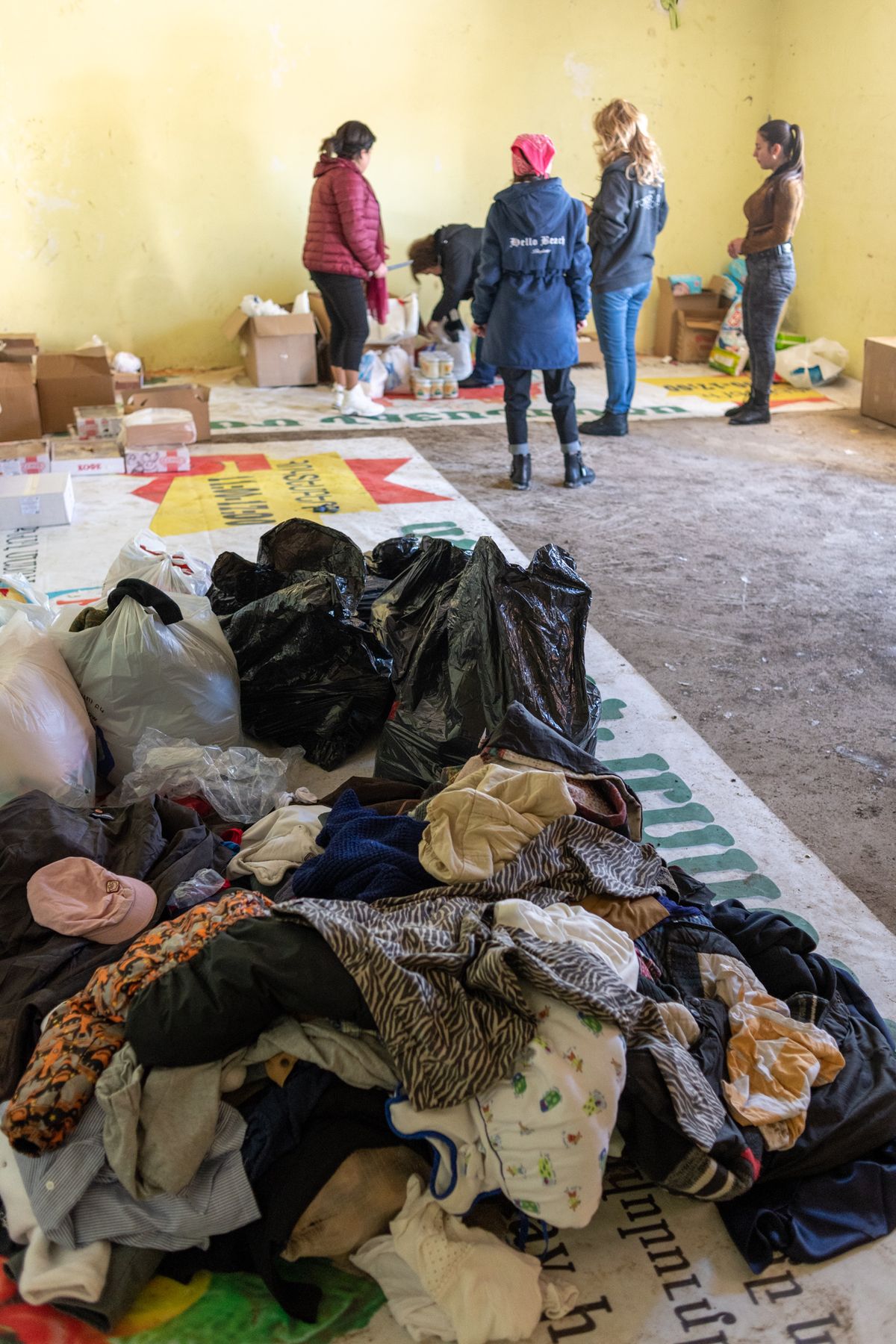
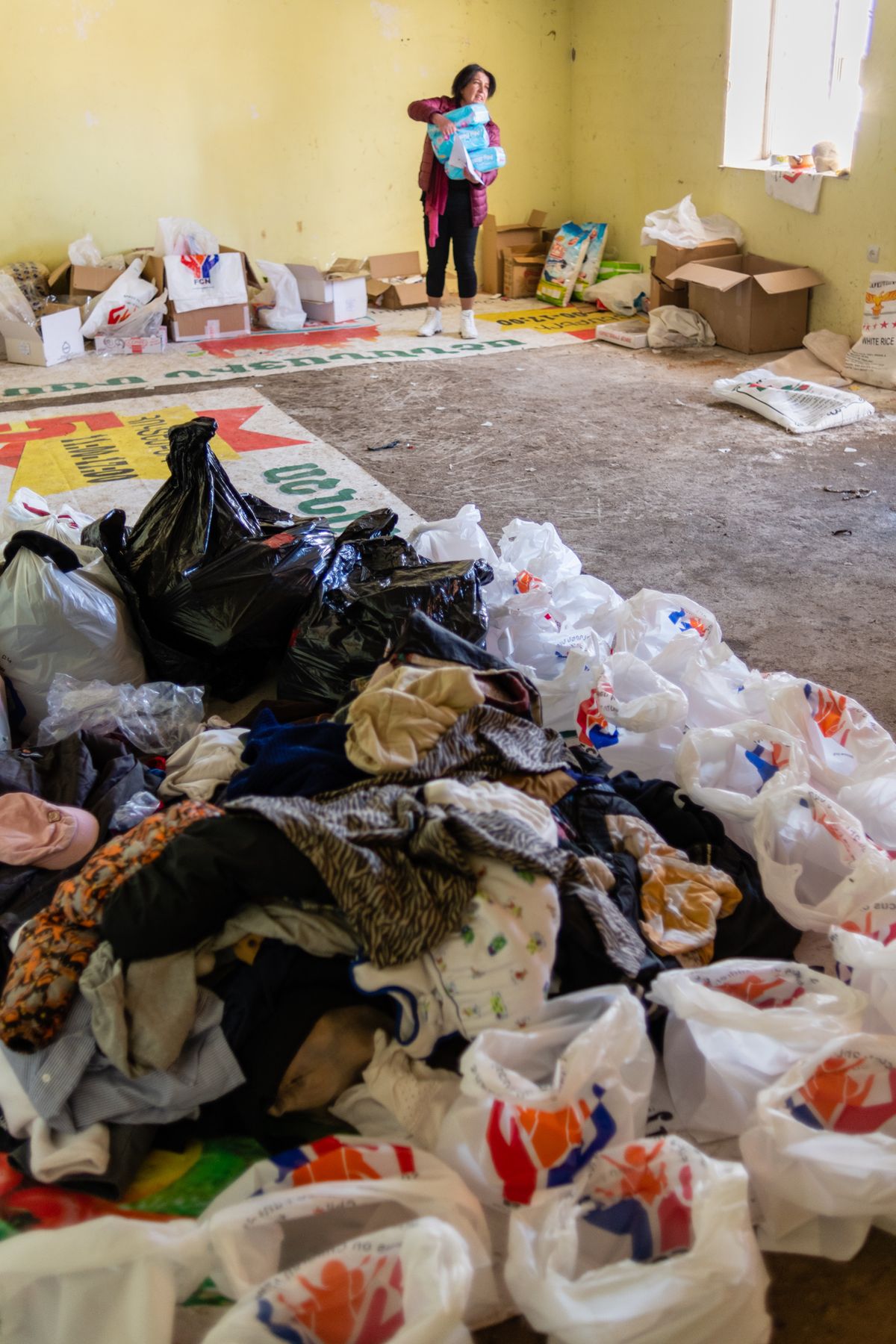
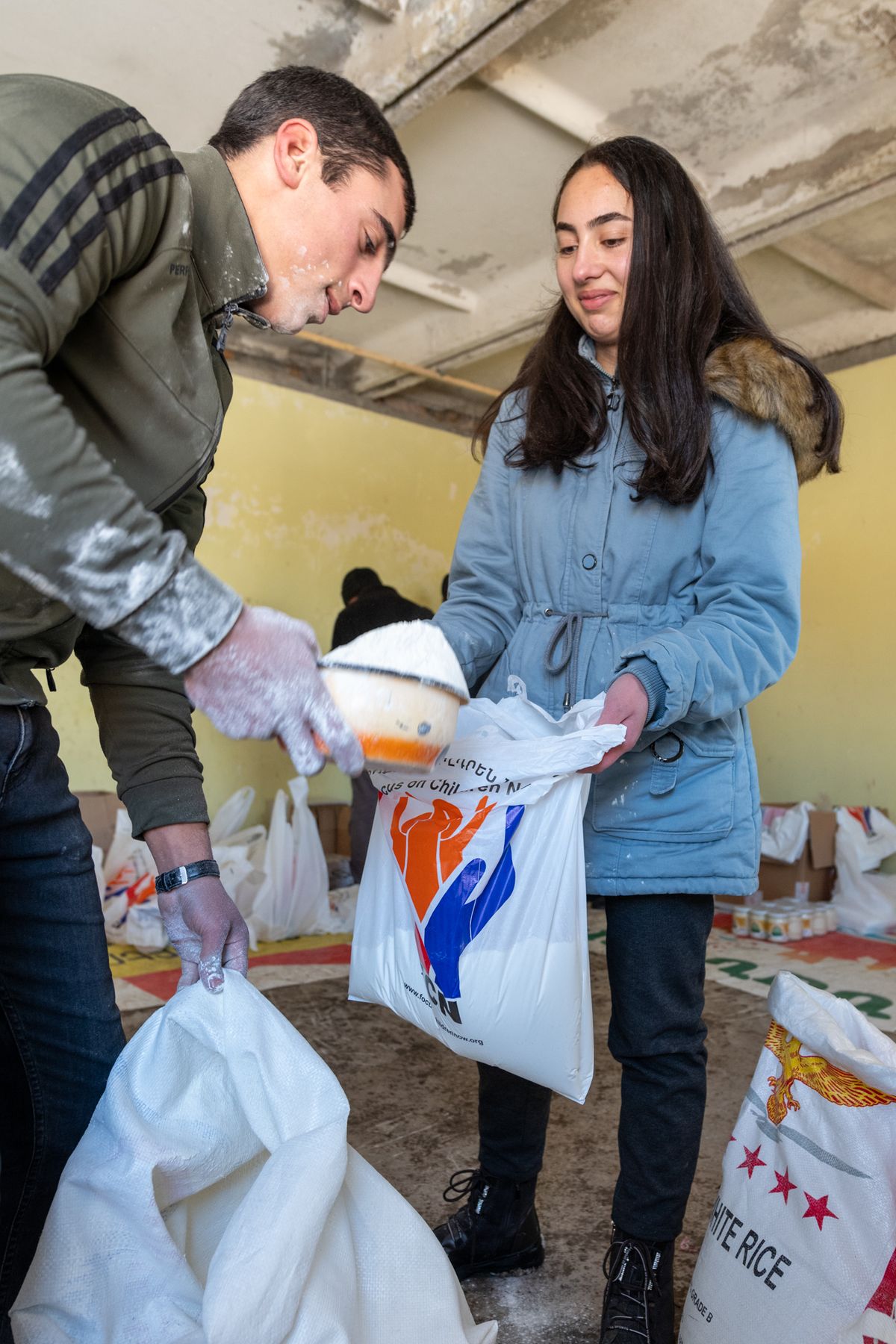
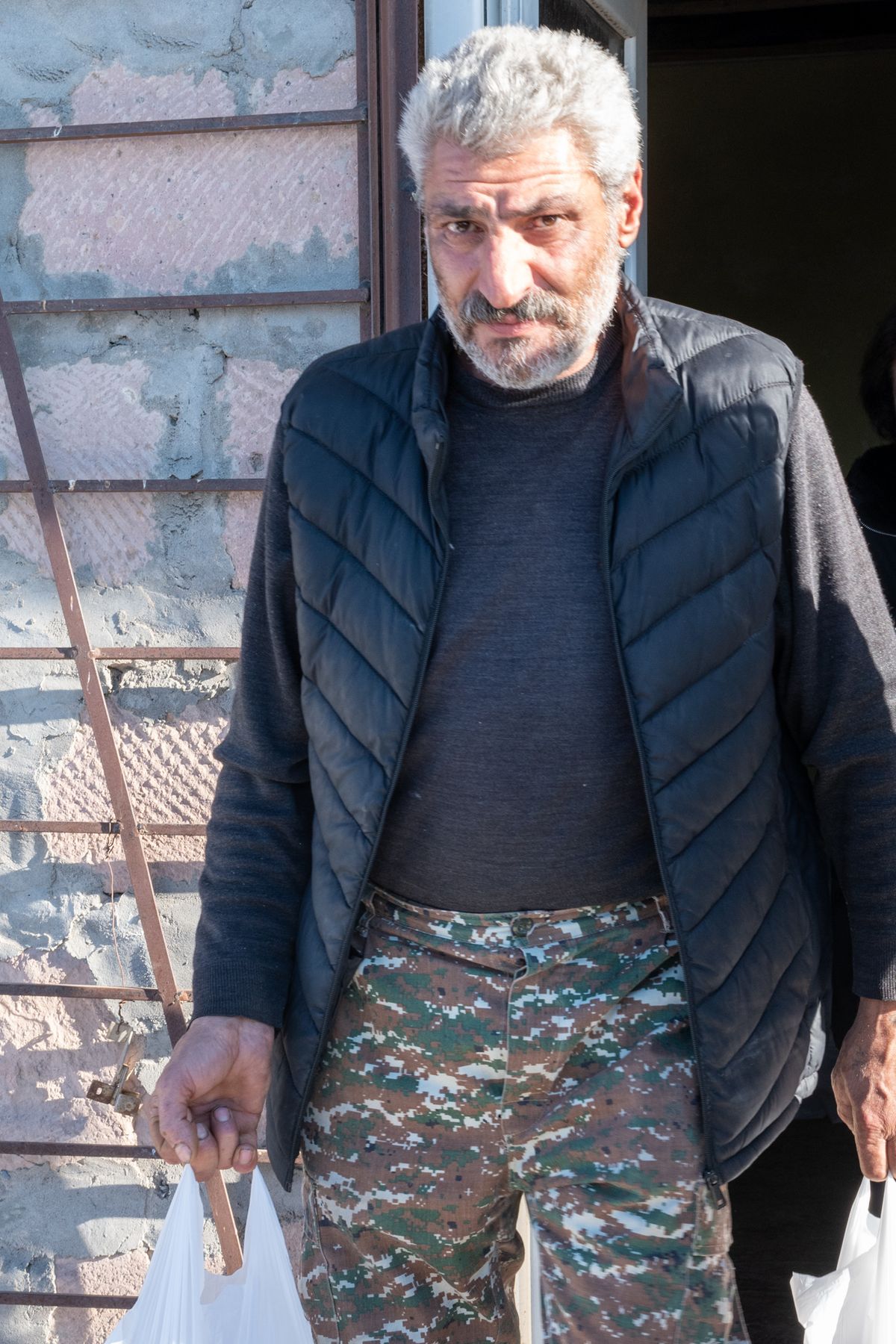
Donations came in sacks and carrier bags. Flour, nappies, winter coats.
Teenagers from the village sorted them on the floor of a hall, one pile for each family. Working with them later gave the film its counterpoint to the elders.
Field note · Yerevan, 14 December
At the Women’s Resource Center the staff had put their own projects aside.
Half of them had Covid. The rest packed hygiene kits, food and bedding for families from Artsakh, up to thirty families a day.
Listen · Ana
We didn’t choose it, but we were on the front line.
In English · 9 seconds
Listen · Ana
During that period half of our staff were Covid infected, so we were just four or five. It was really difficult and we were all exhausted. We thought that if we would not do that, then who would do?
In English · 19 seconds
It was also a sort of way of healing, because they were gathering, talking.
Listen · The centre
Everybody is just thinking about how to help men. But nobody thinks that women need hygiene, all these women that are coming from there.
In English · 13 seconds
Field note · 10 December
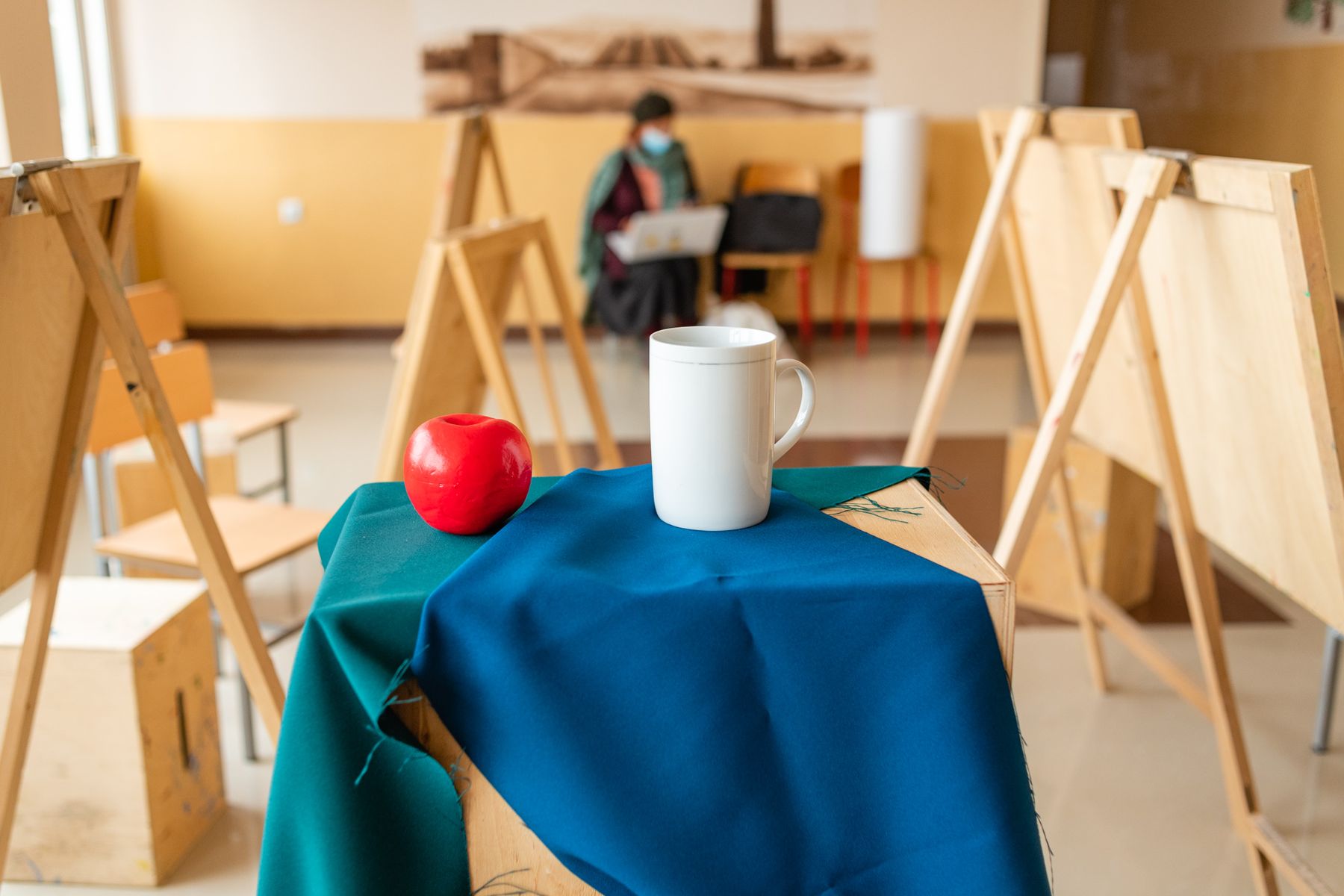
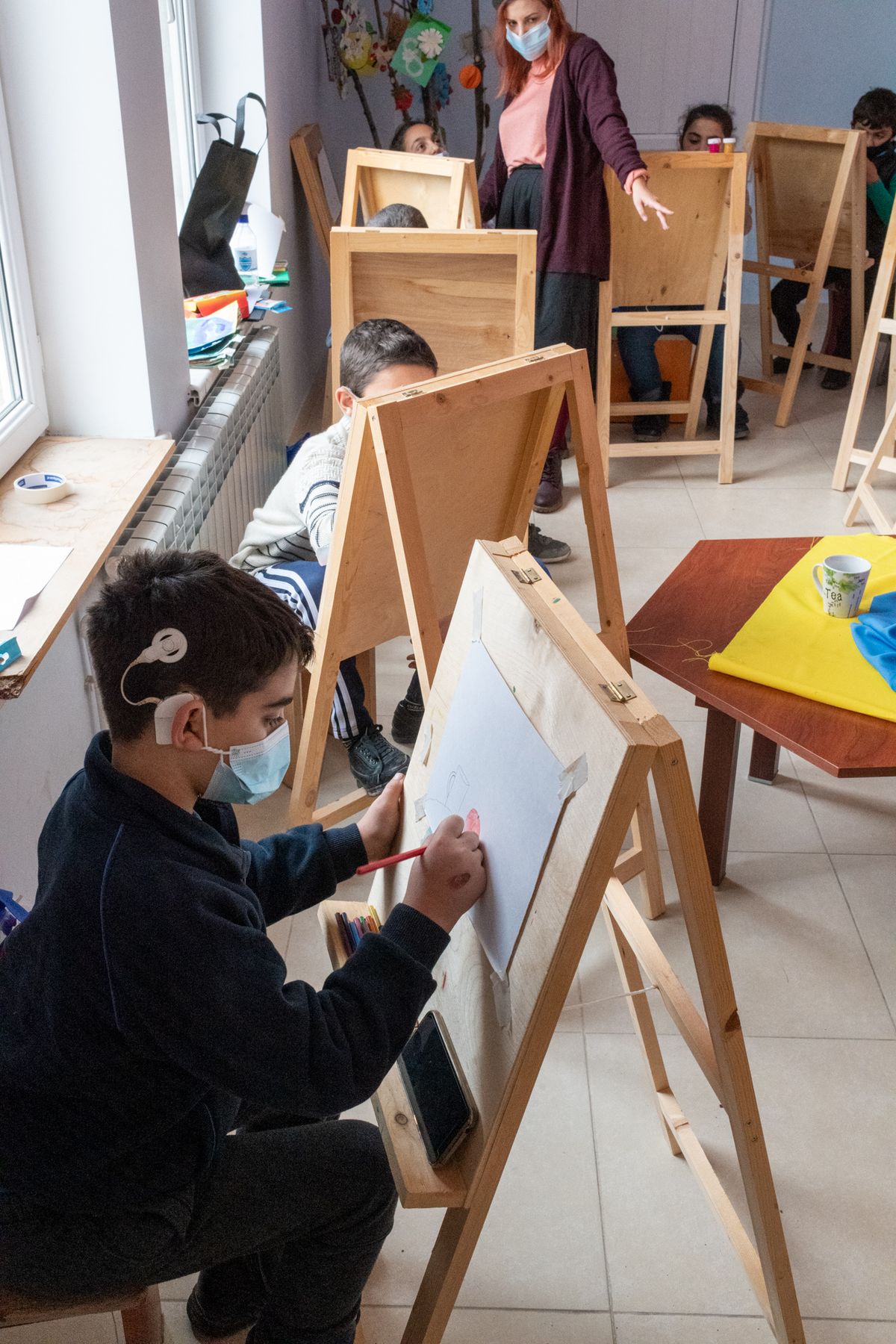
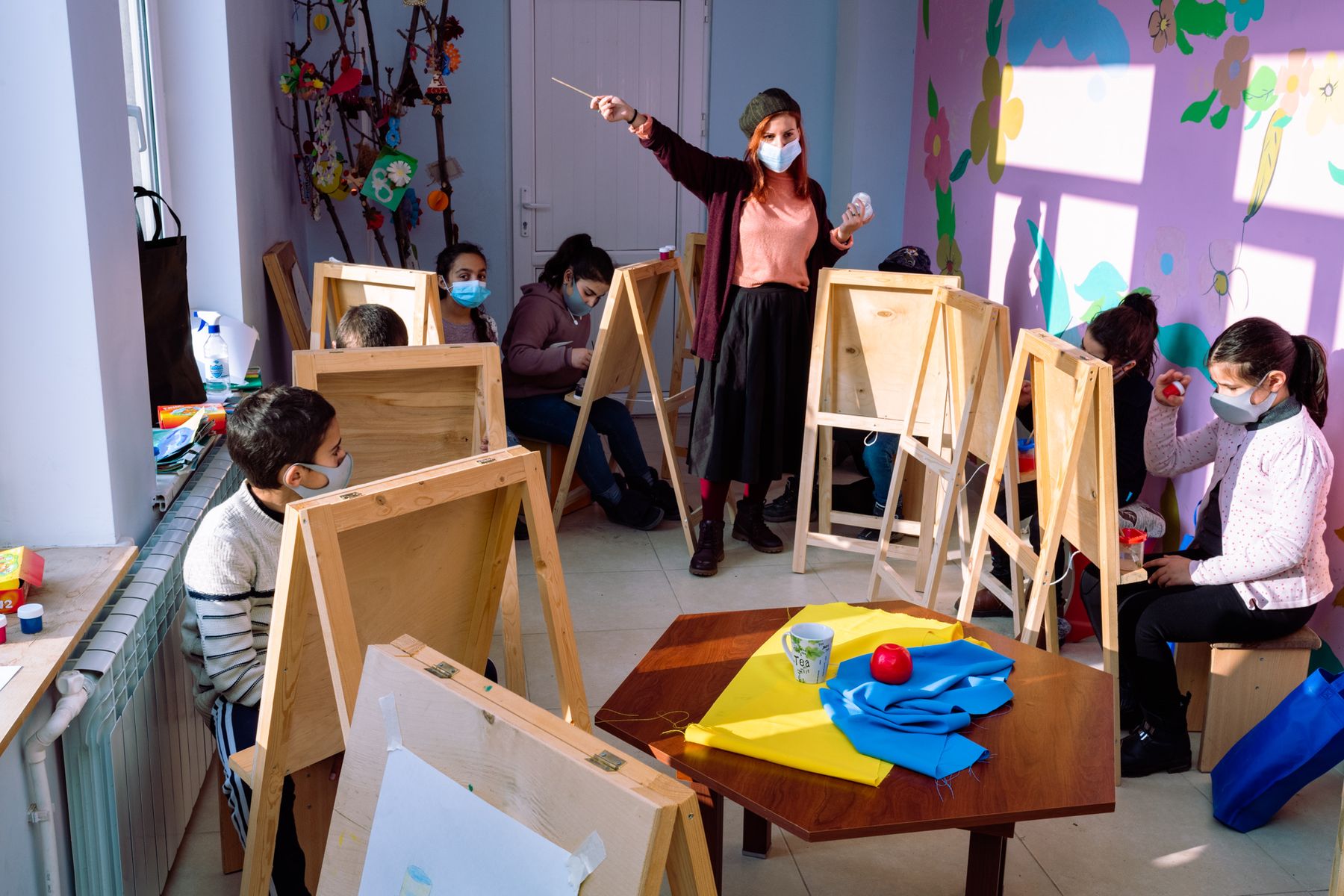
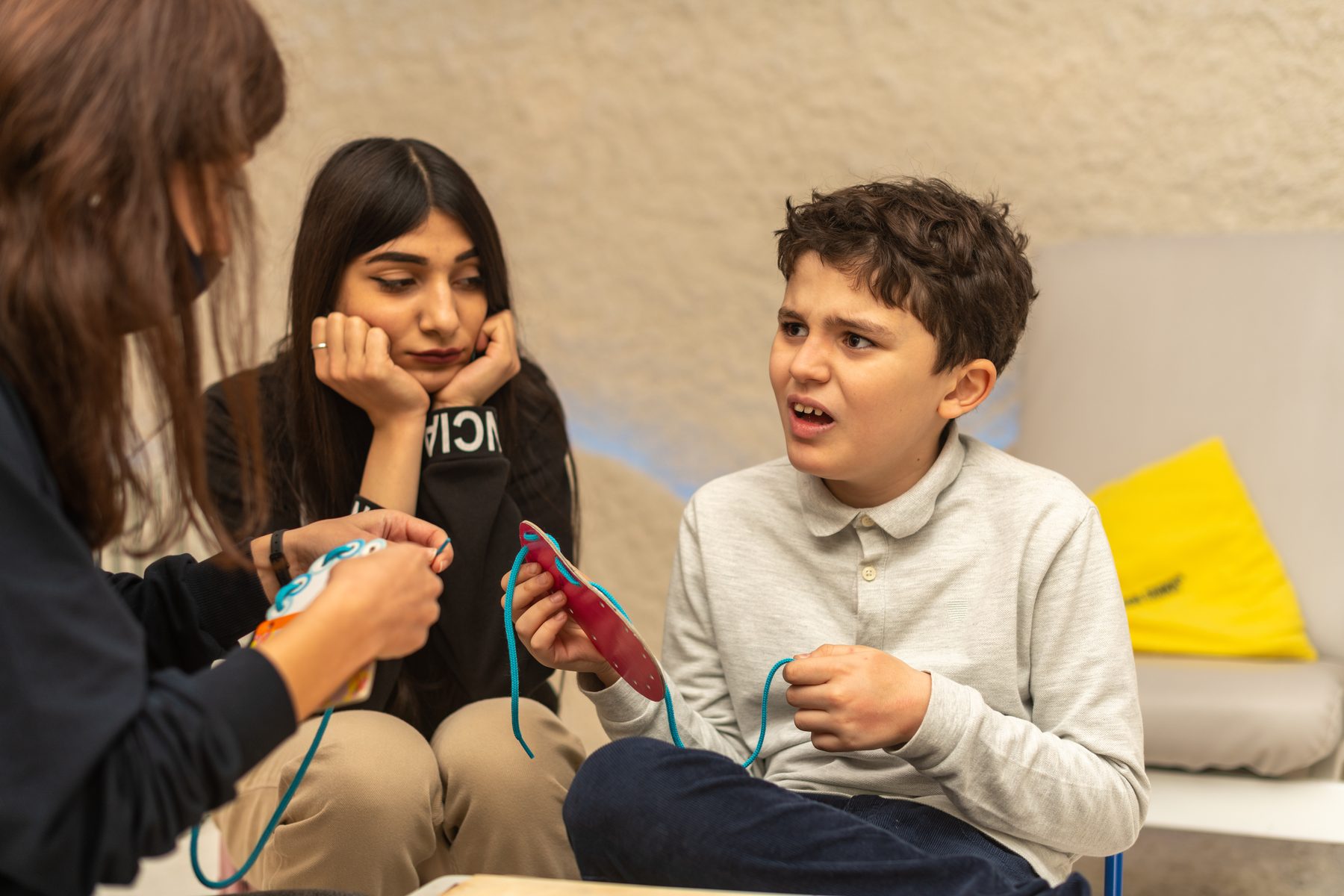
In a bright room children painted at easels, masks on.
An apple and a jug sat on a blue cloth. For an hour the war was somewhere else.
Field note · 12 December
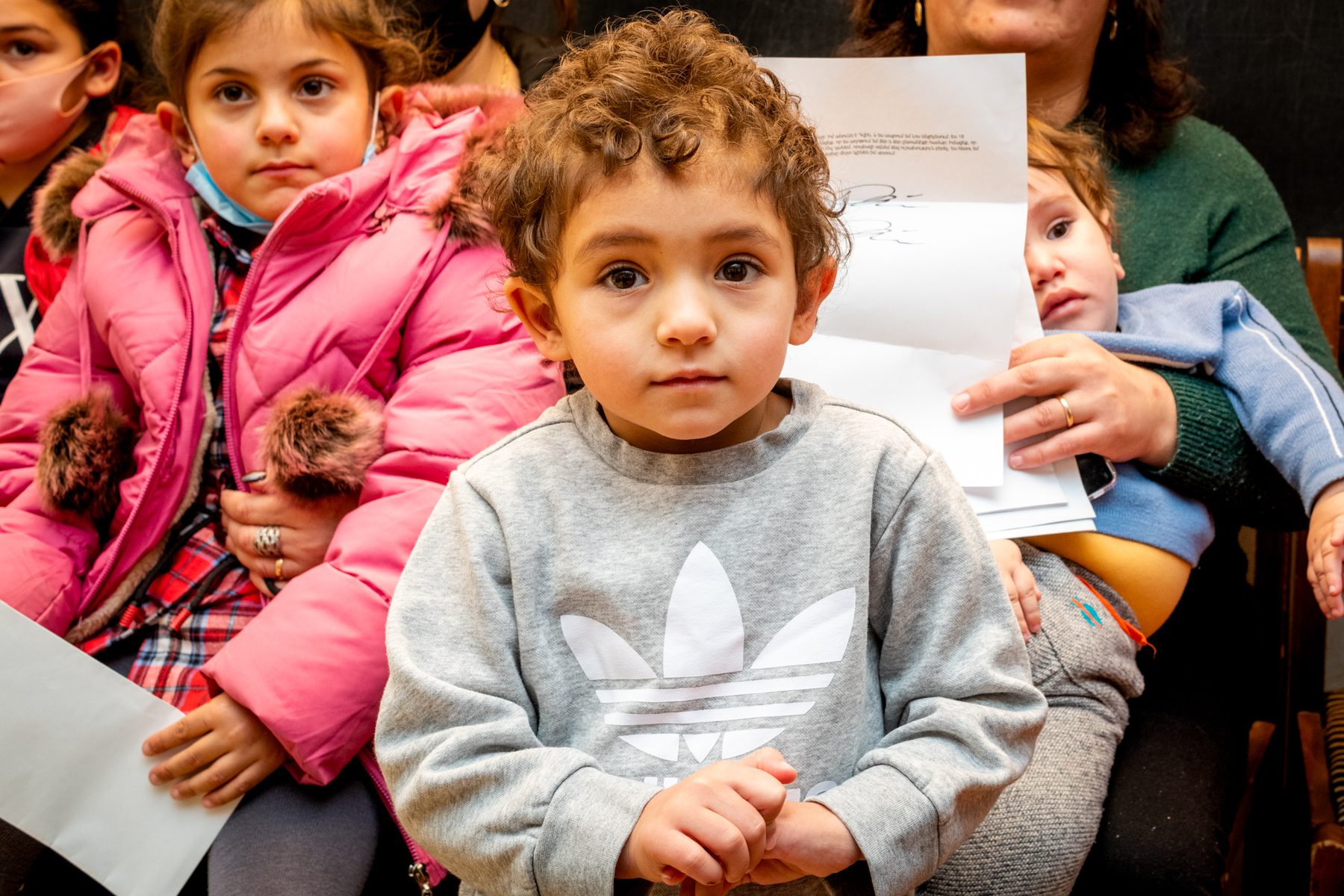
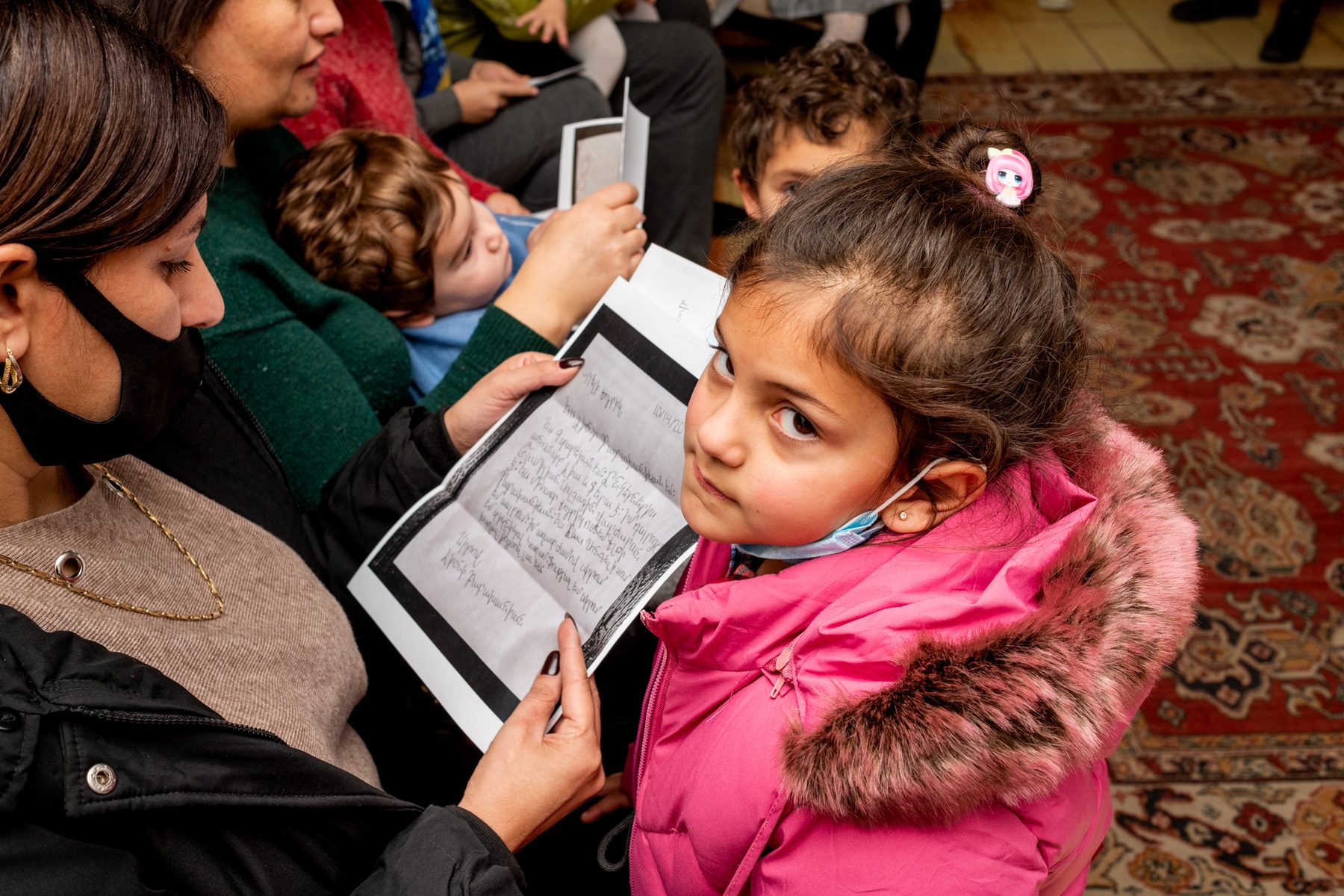
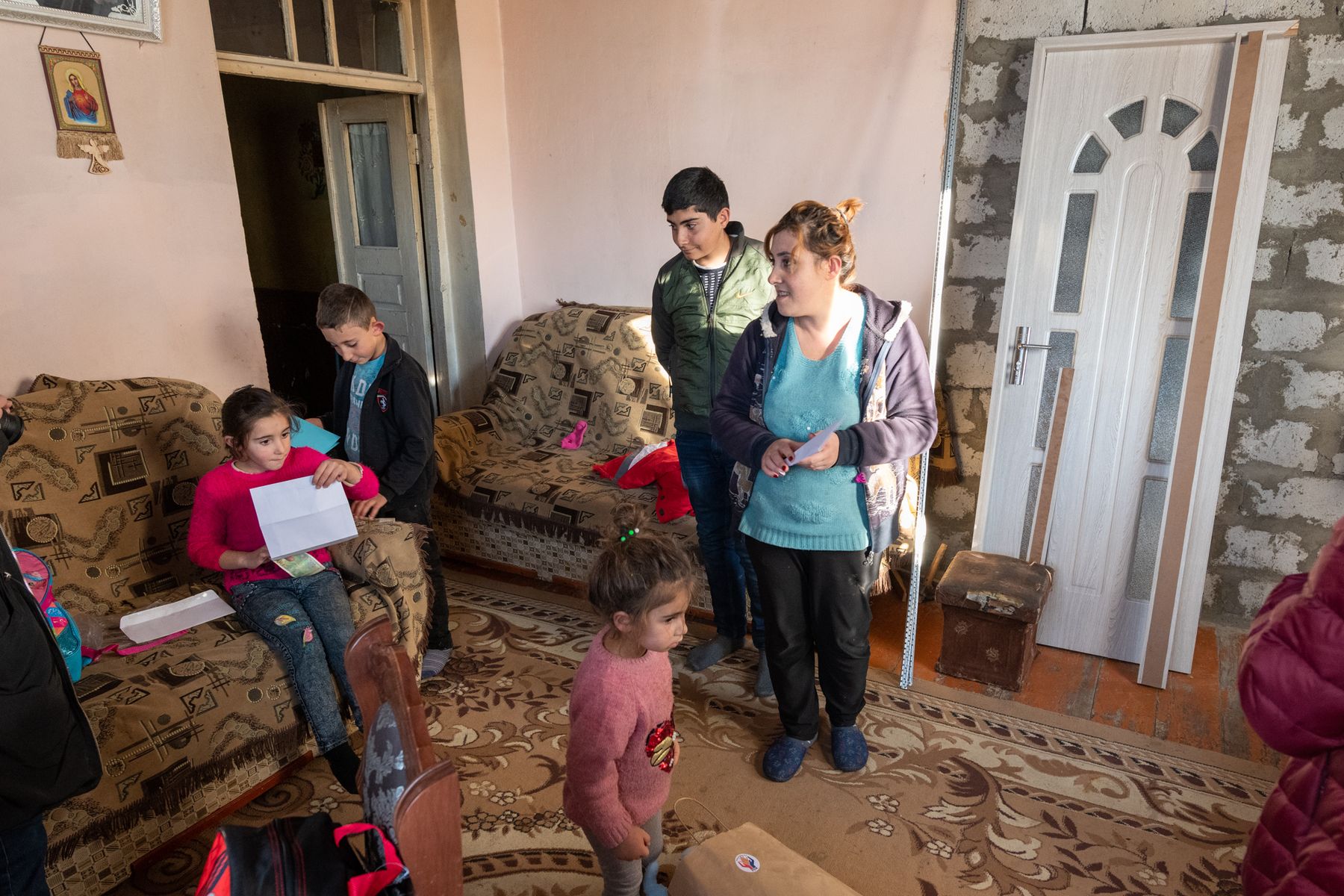
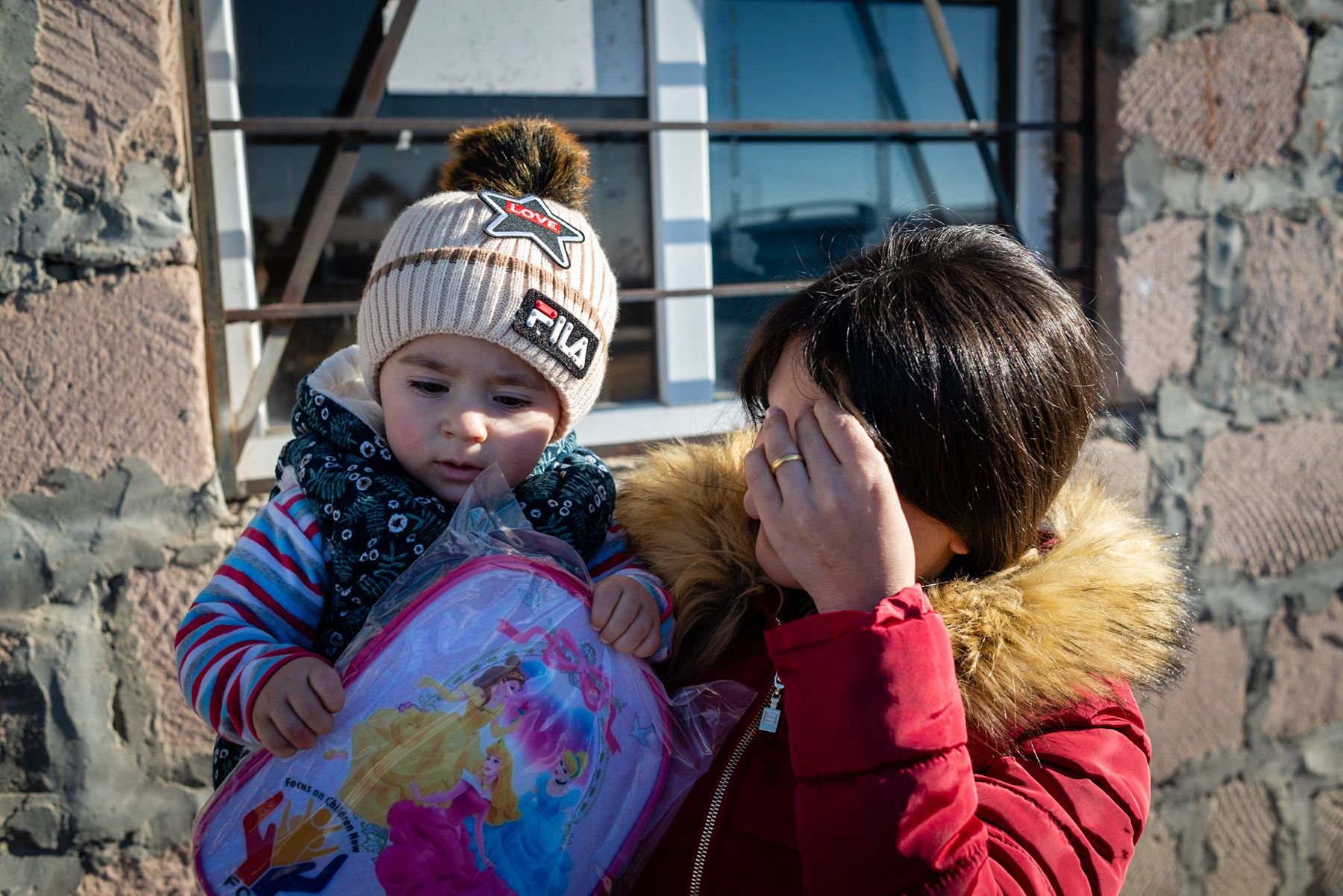
Families who had fled Artsakh filled a kindergarten room.
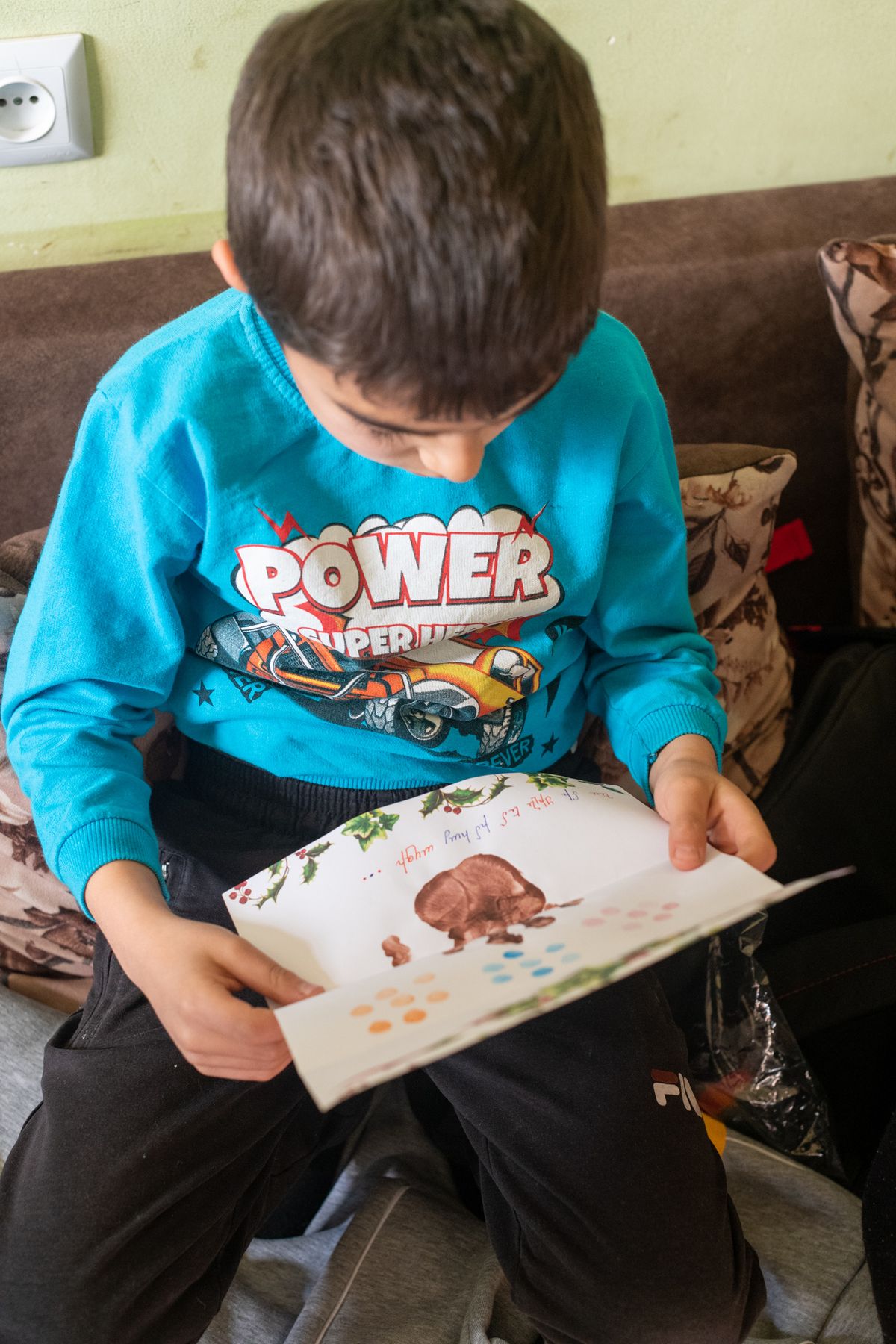
Every child held a Christmas card from a family in Los Angeles. Focus on Children Now brought the cards from the diaspora, with winter clothes and seasonal wishes.
Field note · Oshakan, 14 December
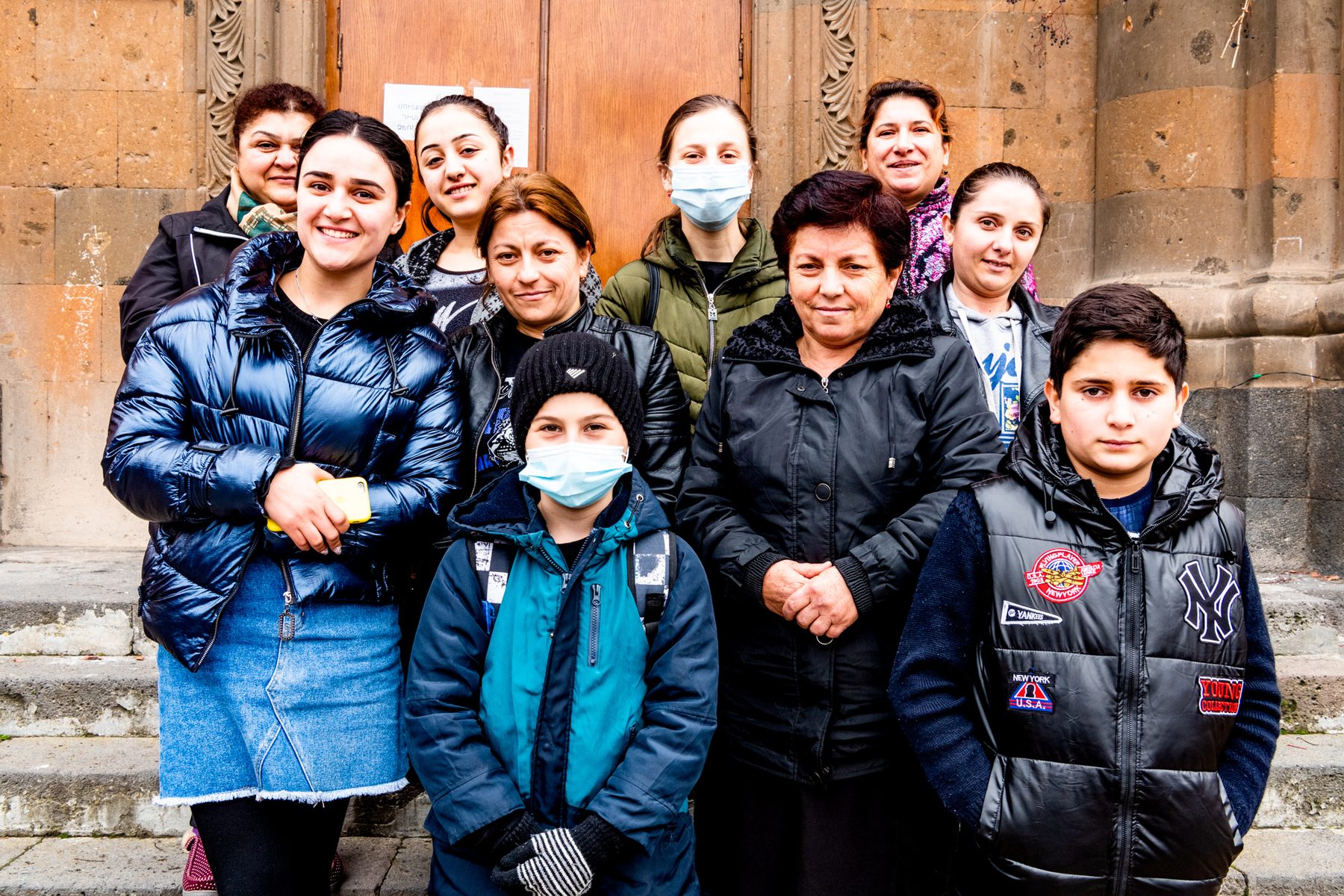
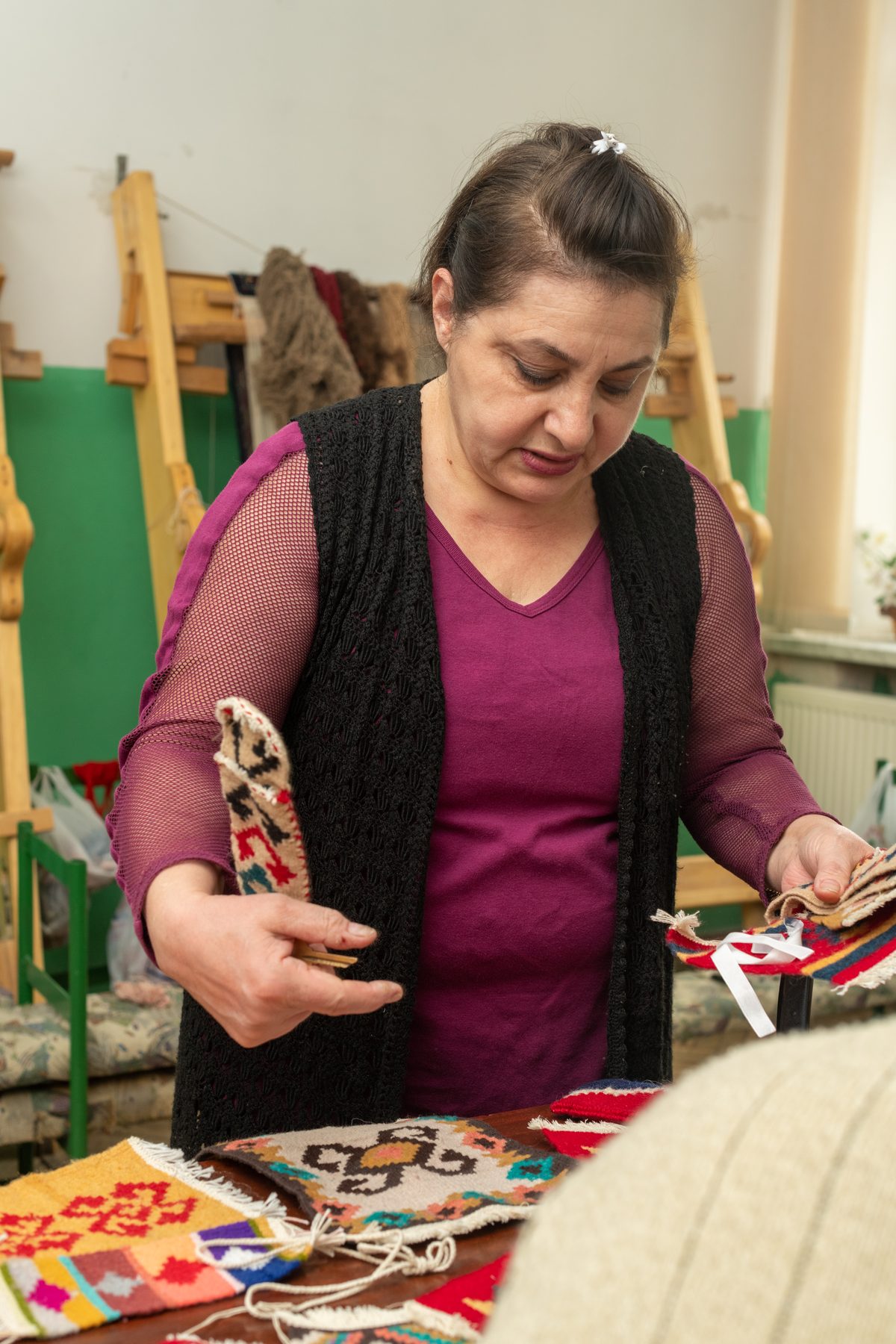
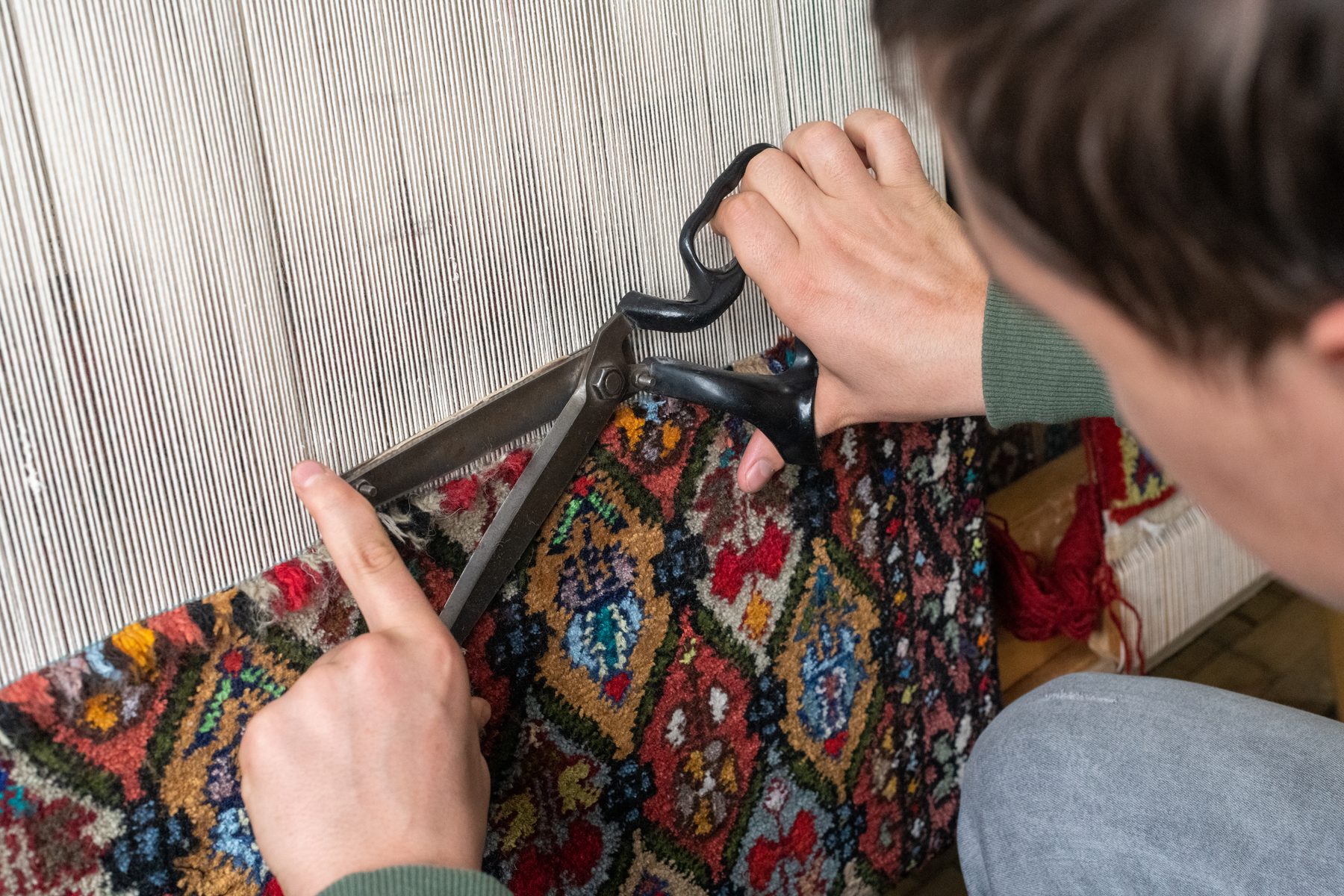
In Oshakan I met a group of women from Artsakh, displaced since the third day of the war.
They were living in houses the village had found for them, and working. We talked for most of an hour, with Stepan translating.
We came here because we heard from our acquaintances that there is a place to stay here.
Listen · Taghavard
I would like our village back. Half of it belongs to us, the other half is not ours any more. The cemetery of the village is a sacred place for us, but it’s not on our land anymore.
In Armenian · 29 seconds · English from the interview transcript
Listen · Armine
Me and my five children are going to return home. My children say that they will kiss the stones and trees once we are back. That’s how much we miss our country.
In Armenian · 26 seconds · English from the interview transcript
Listen · Armine
The Armenian nation has always been able to smile through tears. Even at the hardest moments of life, we don’t lose our sense of humour.
In Armenian · 35 seconds · English from the interview transcript
Listen · Oshakan
It doesn’t matter who, but someone has to keep peace. That’s all I want.
In Armenian · 10 seconds · English from the interview transcript
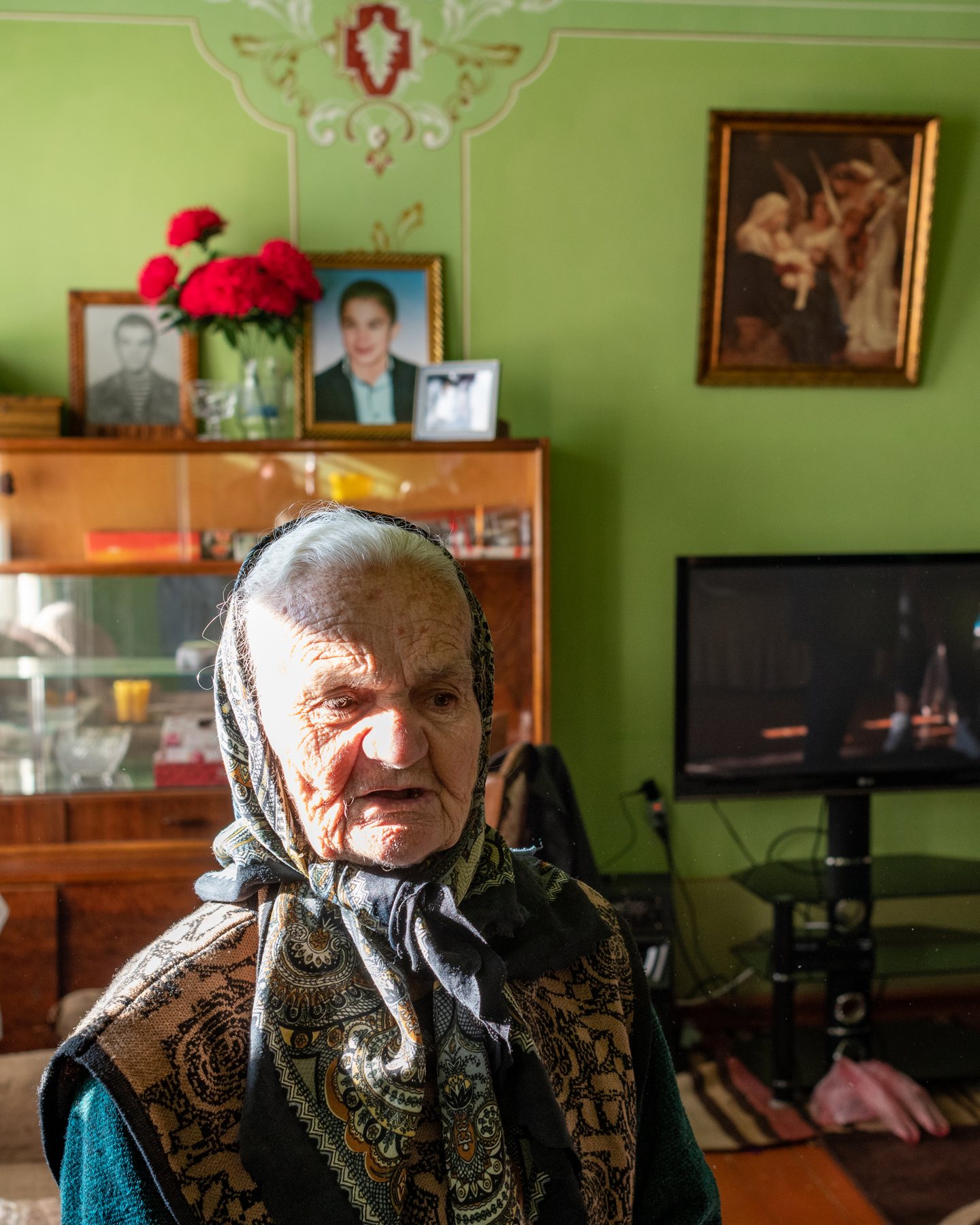
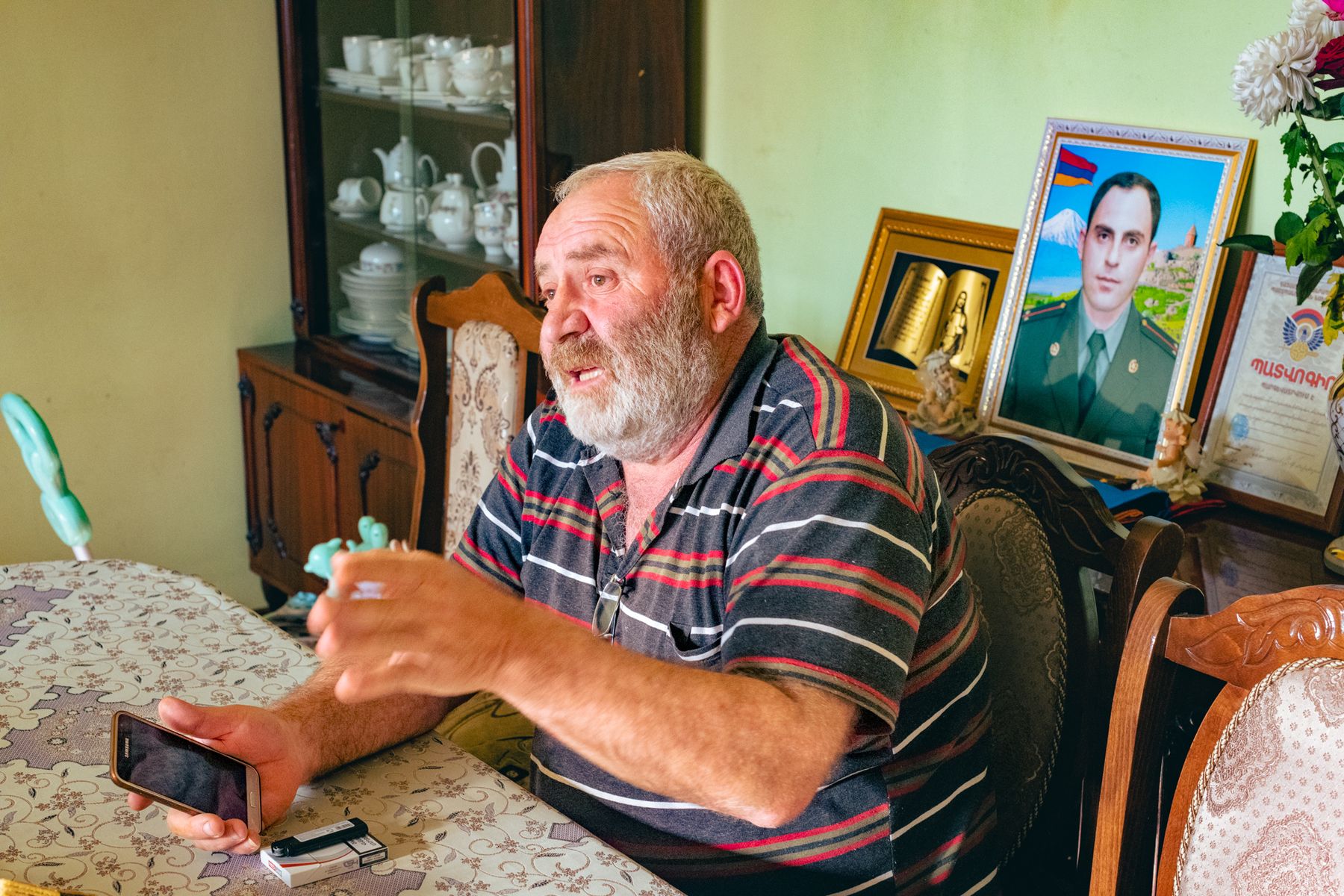
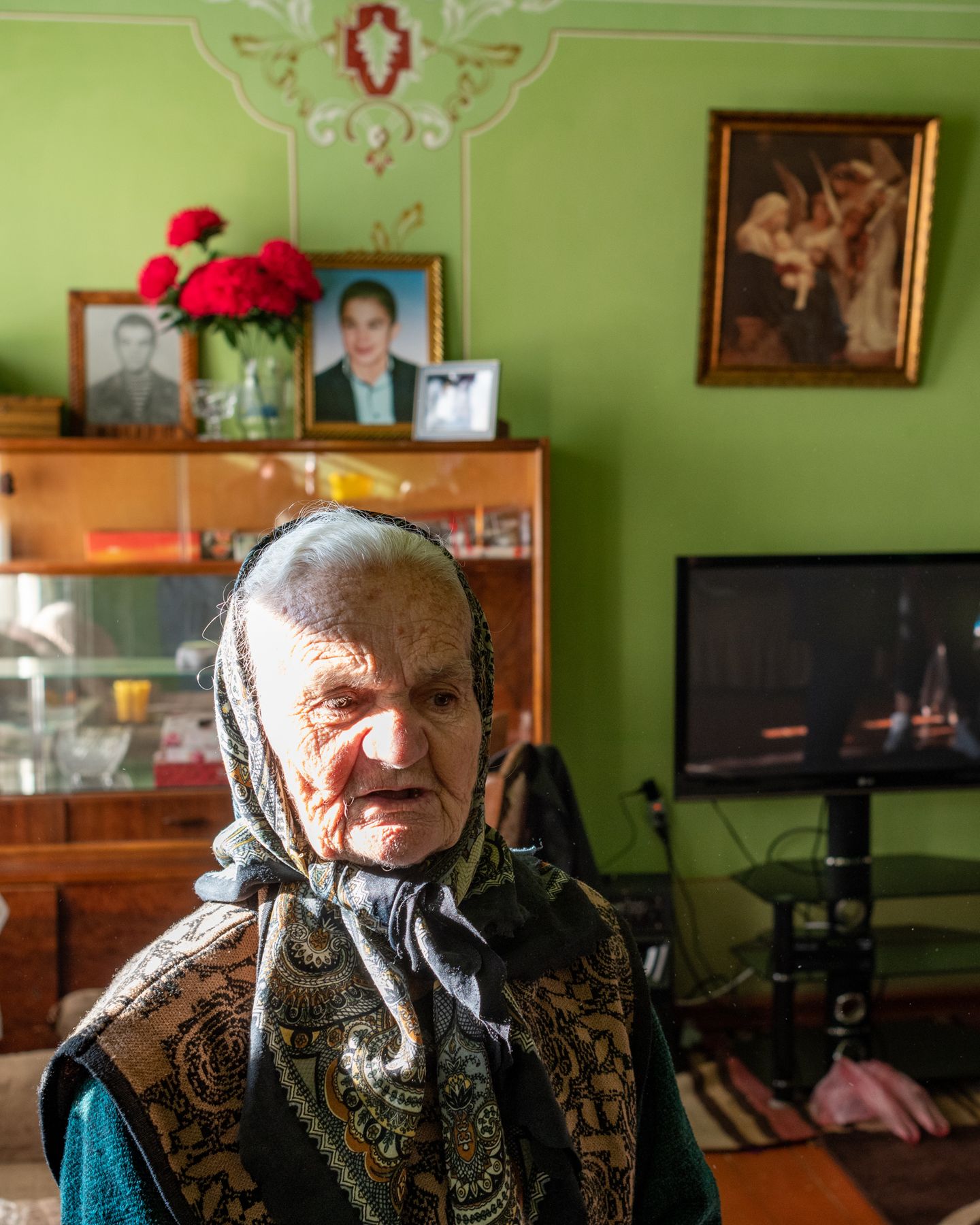
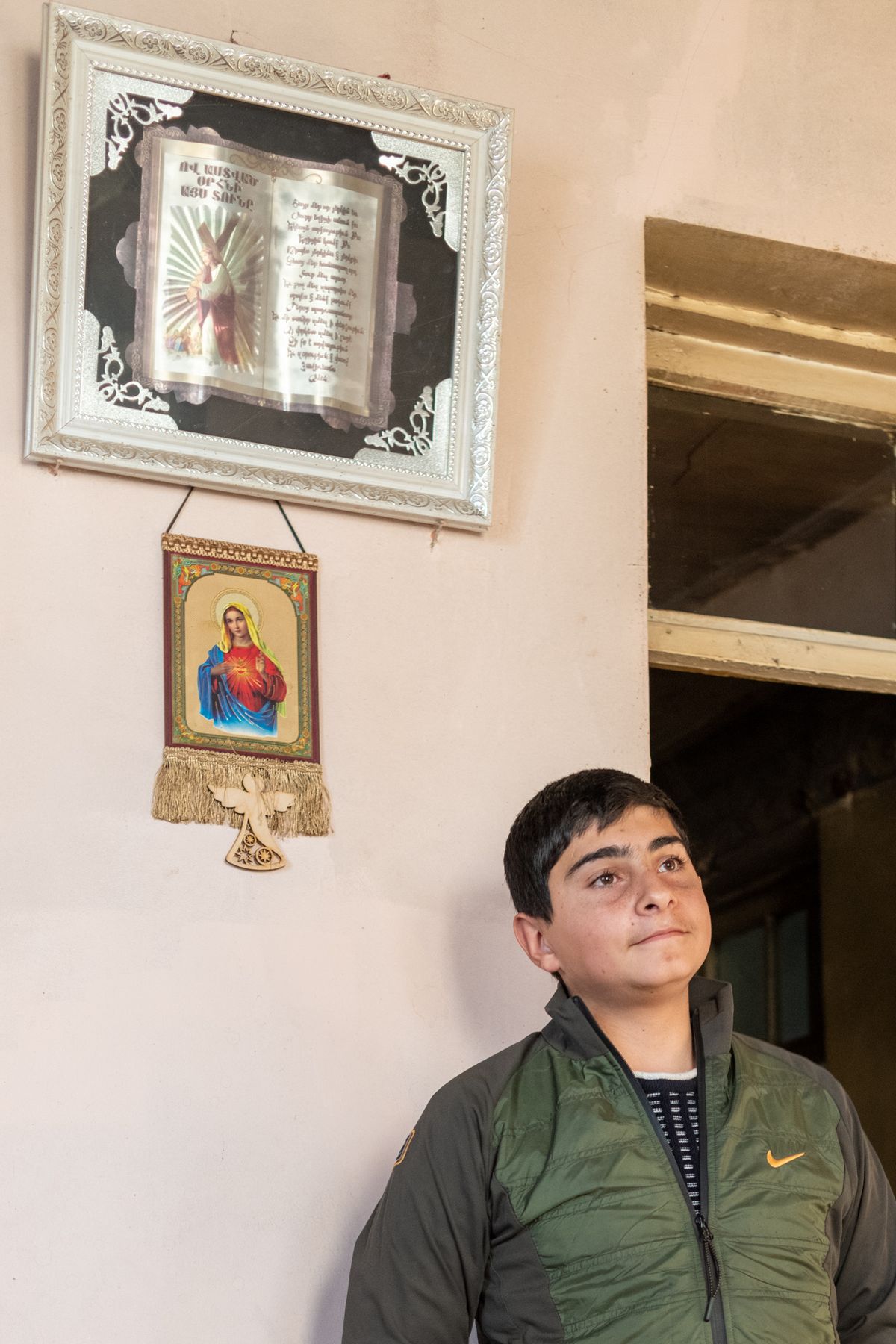
Field note · The portraits on the wall
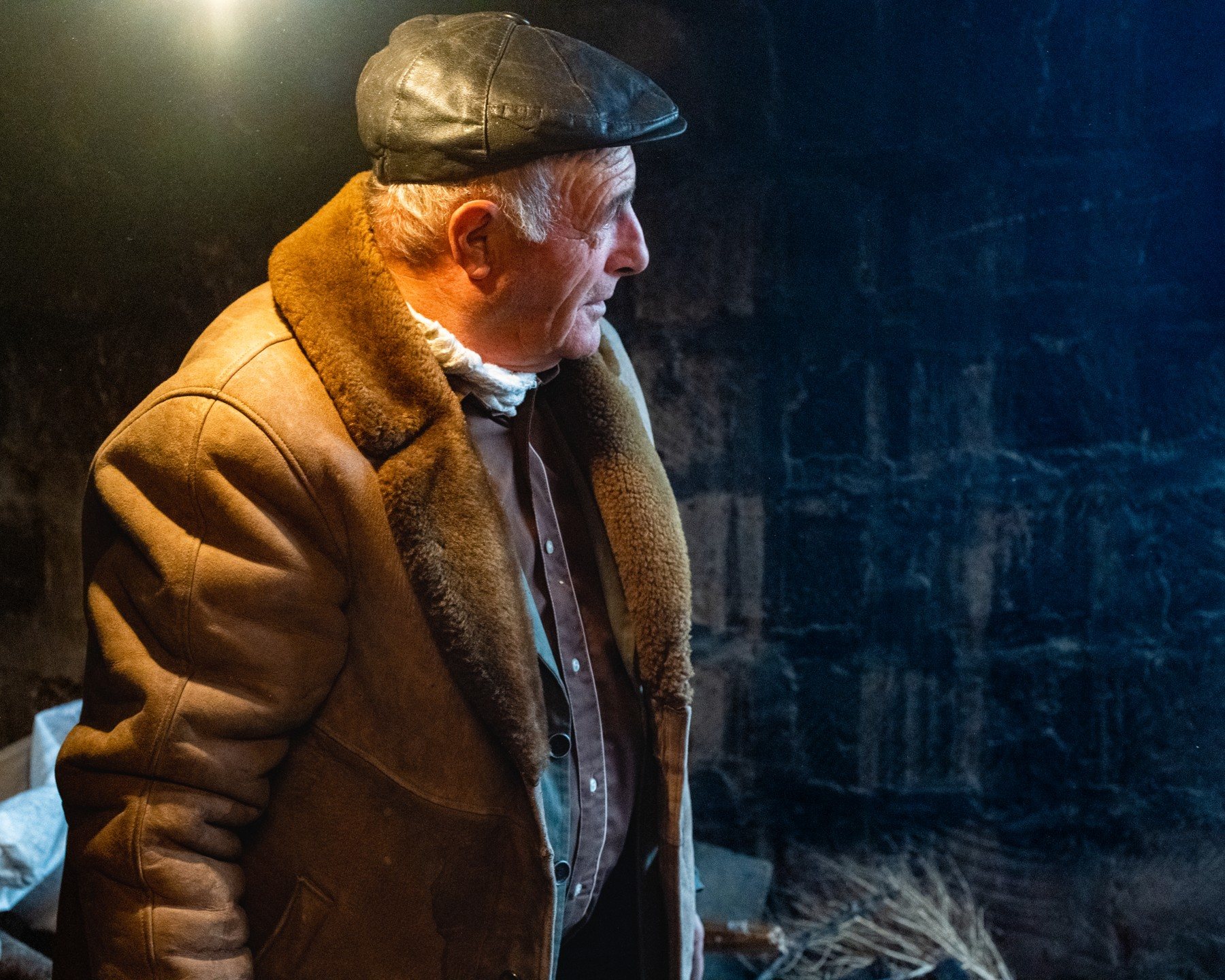
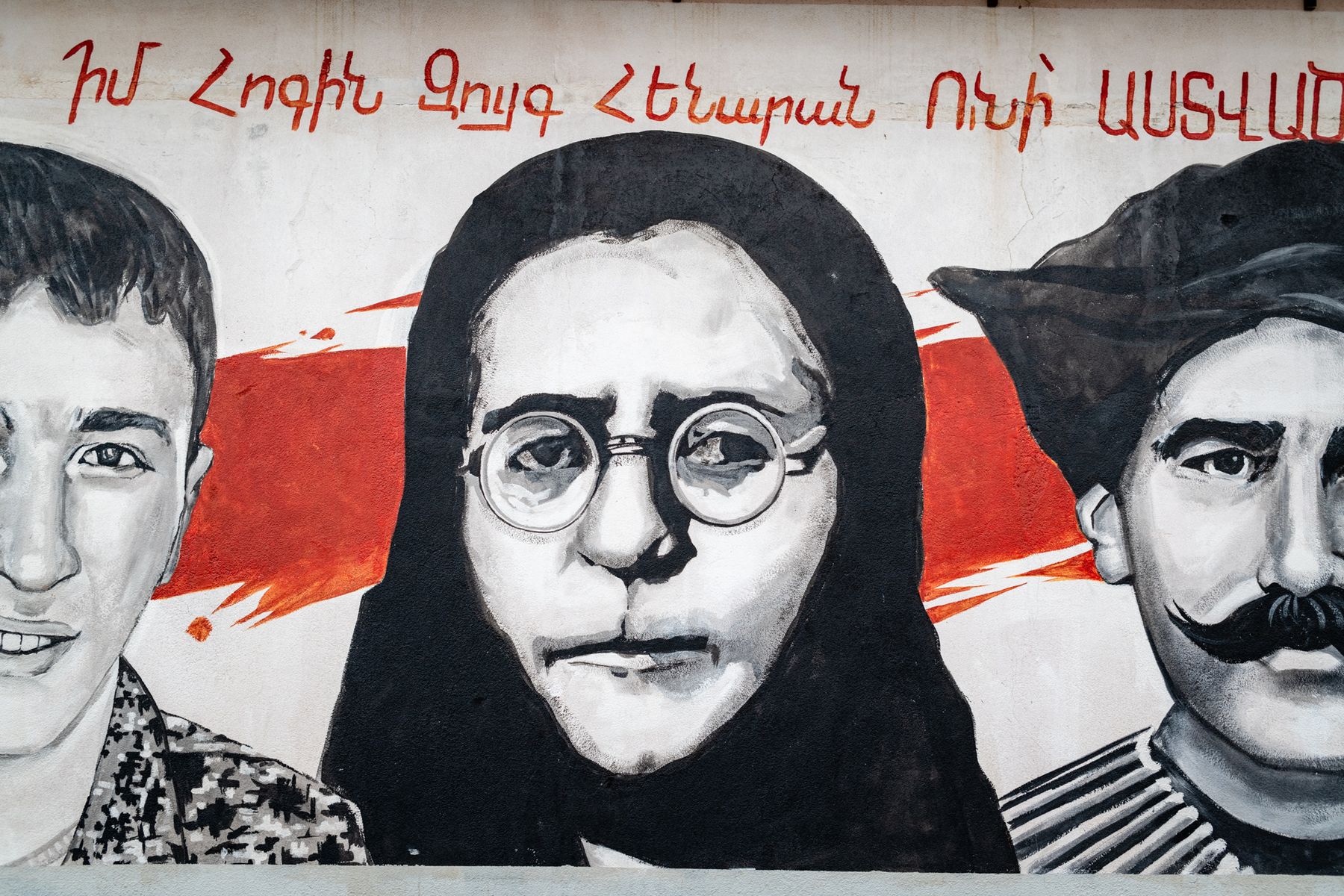
In the homes we visited, the newest photograph on the wall was often of a son in uniform.
People sat beneath it and told me about him. Then they made coffee.
End of the walk
Where it began
These days in December 2020 were my first visit. The people I met here opened the doors to the villages of The Art of Seeing, The Art of Remembering.
Next in Armenia The Yellow Door →